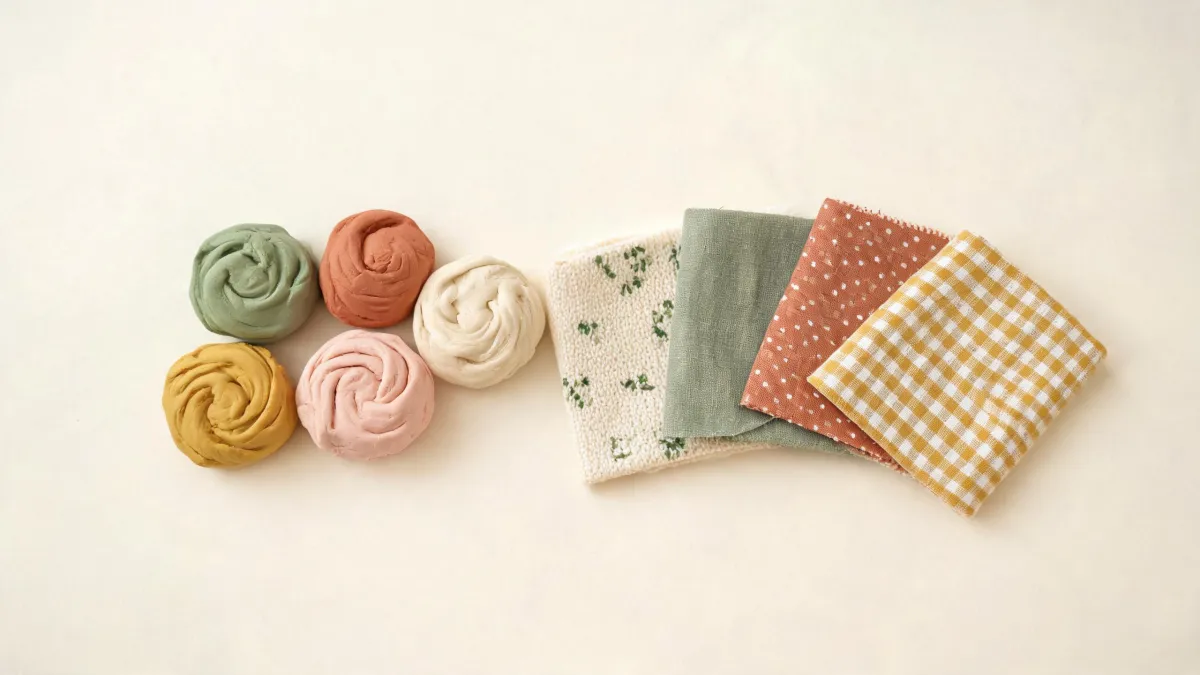
Years ago, the label's 'dries overnight' was treated as a universal promise for any Play-Doh Air Dry Clay project. The current answer is more conditional: there is no single drying time, because thickness, airflow, and humidity control how fast water leaves the clay. That shift matters if you are planning a weekend craft and need the finished piece ready for Monday. The number on the package is a starting point, not a guarantee, and the authoritative version is the guidance printed on the package you actually hold. While a thin ornament may seem dry in a few hours, a thick sculpture can stay soft inside for days. Understanding that range is the first step toward a reliable finish.
The Short Answer
Before a weekend project, many parents assume the label's drying range is a fixed timetable. The reality is that Play-Doh Air Dry Clay dries at different speeds depending on how you shape it and where you put it. A thin ornament can be ready in a few hours, while a thick character base may need a full day or more. The real question is not simply 'how long' but 'what conditions does my piece face, and how do I confirm it is dry?' The package gives a starting estimate, not a guarantee. The rest of this guide explains why there is no single answer and how to find your own. Even two pieces from the same package can finish days apart.
The dependable answer is 'it depends,' and three variables explain why: thickness, airflow, and humidity. A flat leaf dries much faster than a rounded figure because water escapes through exposed surfaces. A breezy room speeds evaporation; humid air slows it. For the current authority, check the package you are holding rather than an older container or a forum post. Hasbro's official pages, including a notice dated 2026, show that details about their products can change over time—retailers set prices and availability, so the information you see today is the version to trust. Apply the same logic to drying instructions. Read 'dries overnight' as advice for typical thin pieces, not a universal promise. Let the guidance on your package anchor your plan.
Why Drying Time Isn't One Number
Water leaves clay from the outside inward. The surface releases moisture to the air first, forming a firm shell while the interior stays plastic. For the piece to finish drying, water inside must diffuse through that shell, and the path is longer for thick sections. Air movement helps by carrying vapor away; high humidity does the opposite and can slow the process to a crawl. The result is that evaporation is fastest when the piece has a large exposed area and good air exchange. Since shape controls that ratio, no single drying time can apply to every project. The thinner the cross-section, the shorter the diffusion path, which is why a rolled slab outperforms a heavy block. This mechanism is the foundation for practical testing. Keep heat out of the equation; it can harden the surface before the core is ready.
The same principle appears in other product safety guidance. On June 24, 2025, Consumer Reports described how the federal child car-seat standard added side-impact crash tests—a significant revision. The article noted that more than 100,000 children were injured in traffic collisions in 2022, which helped drive the update. That example shows that official safety guidance changes when new evidence appears. It is a useful reminder for clay users too: product instructions can be revised, so the wording on your current package should outrank older habits or online claims. The mechanism matters beyond cars: standards evolve, and instructions follow. If a product's guidance can change because of new data, clay guidance can change as well. Treat the current package as the latest edition of that guidance.
Within a single piece, the thick sections control the wait. A 2-centimeter arm dries far sooner than a 5-centimeter body, so the piece is not ready until its thickest part is dry. That is why a clock estimate is so often wrong: it describes an average, not the slowest point. If you test a thin edge and find it rigid, you have learned nothing about the center. Plan around the largest cross-section, and you will avoid the disappointment of a piece that looks done but sags or cracks later. Surface dryness on a thin part is a false signal for the whole object. Use a skewer or weight test to assess the core, not just the shell. Remember that the slowest part is your real deadline.
Thickness and Shape Move the Needle
Shape determines how fast water escapes. A flat star cut from a sheet has a huge surface area and nearly no depth, so moisture leaves from both faces within hours. A sphere or a figure with a chunky base has the opposite ratio: less exposed area per unit of volume, and interior water must travel a long route outward. The surface-area-to-volume ratio is the best predictor of drying speed. A 3-millimeter leaf can feel dry in 3 to 4 hours, while a 30-millimeter solid ball may stay damp inside for 24 hours or more. That is why flat ornaments can be ready the same afternoon, while dimensional pieces often need an overnight rest. Even two pieces with the same weight can differ dramatically if one is rolled thin and the other pressed thick. Choose your shape with this ratio in mind when you are short on time.
Room conditions can shrink or stretch the drying window more than most people expect. In a dry, air-conditioned room with a gentle fan, a small piece might dry in 6 to 8 hours. In a humid basement with still air, the same shape can take 24 to 48 hours. Airflow matters because it removes the saturated layer of moisture near the clay; humidity matters because moist air accepts less vapor. That is why identical instructions produce different results in different climates. If you are on a deadline, increase airflow first—but avoid heat, which can create a hard crust that traps moisture inside. Monitor the room, and adjust expectations when weather changes. A dehumidifier can help in damp seasons; a fan is simpler and often enough. Low and slow is safer than fast and crusty.
How to Test for an Even Dry
Surface touch is the test that fools nearly everyone. A dry, hard shell can form within a few hours while the interior remains a stiff paste. A piece can also change color and look matte while the inside is still cool and soft. The common failure is trusting that appearance and moving on to sanding or painting. That is how cracks and warping appear later. The only reliable route is to test the internal state, not just the surface. If the piece feels dry but looks slightly distorted, treat that as a warning sign. Wait, retest, and confirm before you commit more work. A clock cannot see inside the clay; your hands and a small probe can.
Physical checks are, in effect, an audit routine similar to the one SafetyBeltSafe recommends for car seats. A January 25, 2026 bulletin from the organization listed recall and replacement parts, and it told caregivers to check expiration dates, missing parts, and signs of damage before trusting a child restraint. For clay, the equivalent is a weight test, a tap test, and an internal probe. Weigh the piece: a dry one is noticeably lighter. Tap it with a fingernail: dry clay gives a clear click, while damp clay sounds dull. For thick pieces, insert a thin wooden skewer into a hidden spot; if it comes out clean, the interior is dry. If it carries clay, wait and retest.
The Trap of a Crusty Surface
The crusty-surface trap causes more ruined projects than beginners expect. A thick piece dries from the outside, and the shell becomes rigid while the core still holds water. As the inside continues to lose moisture, it shrinks; the unyielding shell cannot adjust, so the piece warps or cracks. Premature sanding is another version: a shell that looks dry can peel or crumble when the interior is still damp. Painting too early is the third risk, because trapped moisture can cause bubbles or flakes later. Recognize the trap before you spend hours on finishing, and you will save yourself a rebuild. The damage often appears only after you think the piece is complete.
Keep drying even by turning the piece once or twice a day so the underside receives the same airflow as the top. Place dense sections where air can reach them, and avoid leaving a flat base pressed against a table. For bulky sculptures, consider hollowing or scoring the underside early, while the clay is still workable, to shorten the drying path. If the room is humid, use a fan or a dehumidifier; if the surface cracks, slow the process with a damp cloth or a loosely covered container to let the interior catch up. Each adjustment changes the drying curve, so retest with the weight, tap, and probe method. Remember that a steady, moderate pace produces fewer defects than a fast, uneven one.
A Timeline of Updated Guidance
Official guidance in adjacent categories changes more often than people assume. In 2022, more than 100,000 children were injured in traffic collisions; by June 24, 2025, Consumer Reports was covering a new federal side-impact testing standard. That standard was a direct response to the crash data. Then, on January 25, 2026, SafetyBeltSafe U.S.A. published a recall and replacement-parts list that flagged a specific Evenflo Titan 65 model and pointed to FMVSS 213 compliance checks. The dates show a clear pattern: guidance is revised when new evidence arrives. The same logic can reshape product instructions, including clay drying advice. New crash data led to a stronger rule; new formulation data can lead to a new drying-time phrase. The package date is therefore part of the evidence you should consider.
Package instructions are not permanent, and the current version deserves more trust than an old memory. Hasbro's official site, for example, carries a 2026 notice that product range, availability, and pricing can vary by retailer. That notice is a reminder that even brand-level details are treated as changeable. A drying-time phrase can change too—because a formula changes, because humidity guidance is added, or because a package is updated for clarity. If a package says 'dries overnight,' read it as advice for that product's current formulation. If you are using an older container, check the brand's current care page before planning your timeline. The latest package is the authoritative version until a newer one appears. Look for a copyright year or version marker on the label.
Because guidance can change, make a habit of checking three sources: the package itself, the brand's official care page, and any insert that came with the product. Look for a copyright date or version number on the package; a recent date is a stronger signal than a phrase repeated from memory. When searching online, prefer pages that name the exact product and carry a recent date. The goal is not to find one permanent universal time, but to find the current recommendation for the exact product in your hand. That habit turns product care from guesswork into a small audit, and it applies to clay just as much as to child safety gear. If the package has no date, treat its instructions as provisional and rely more on physical tests. Audit, then act.
The Rule You Can Rely On
Here is the decision rule: drying time is not a fixed number, so decide by physical tests, not by a clock. Start by assessing the thickest point of your piece; that is the part that sets the pace. Control the environment with airflow and reasonable humidity, and turn the piece occasionally so the shell does not seal moisture inside. When the surface feels hard, test weight, sound, and internal firmness. If the piece is lighter and clicks when tapped, and a probe comes out clean, it is dry enough to sand or paint. If any test says otherwise, wait another day and retest. Use the package as your starting reference, but let the physical evidence close the deal.
Keep this compact rule in view as you work: assess the thickest section, control airflow and humidity, test weight and sound and internal firmness, check the current package for the product's specific guidance, and retest whenever any test leaves doubt. That sequence works for a flat ornament and a chunky figure alike, and it turns 'how long does it take' into 'how do I know it is ready.' Unlike a fixed hour count, this rule accounts for your shape, your room, and your piece's actual state. It borrows the audit mindset from car-seat safety: confirm the details before you proceed. If a test is ambiguous, the safest answer is to wait, because drying that is cut short often leads to cracks, warping, and paint failures.
Your project is done when the tests say so.