Reuse what protects play
Storage cups, tins, mats, and textile bags are planned as part of the play system so products are easier to keep organized.
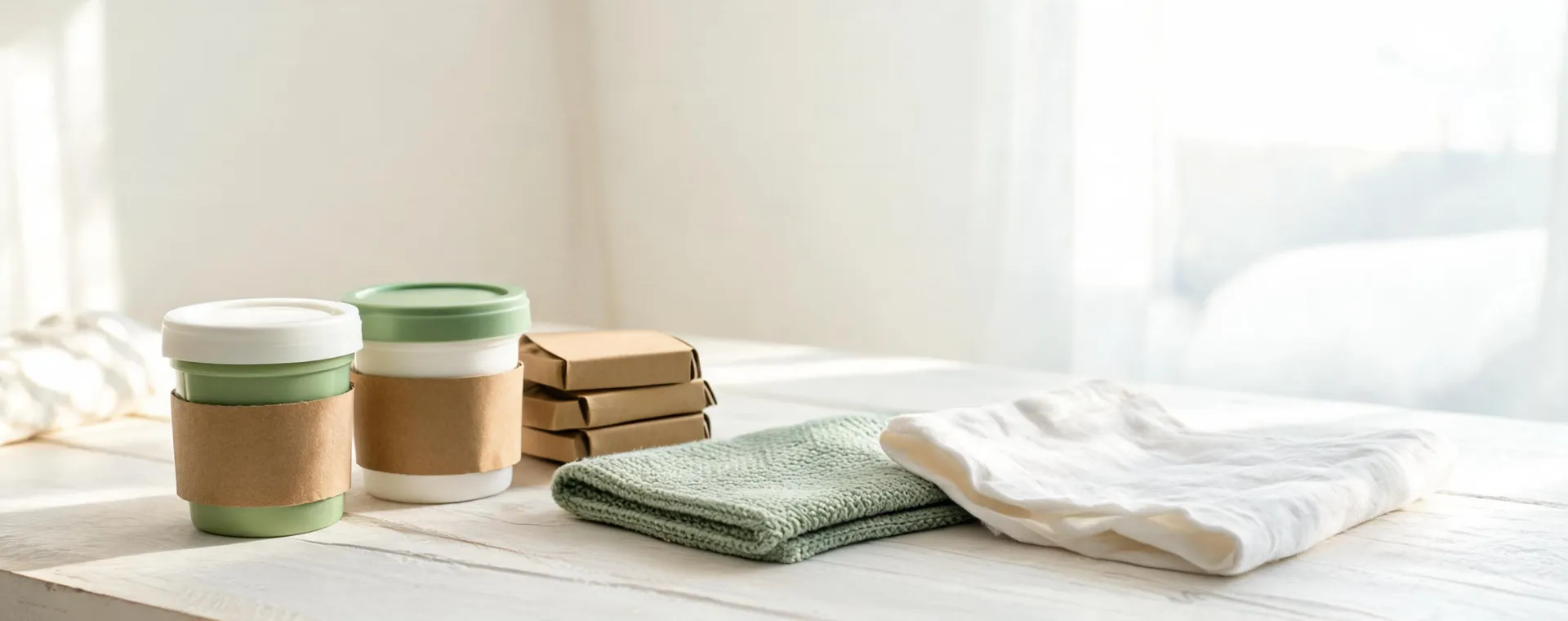
Our sustainability work focuses on reusable storage, clearer material choices, responsible packaging, and products that stay useful beyond a single afternoon.
Play Doh approaches sustainability through ordinary decisions that families notice: containers that close well, paperboard that can be reduced or recycled, textile pieces that survive washing, and product language that helps caregivers store and reuse materials instead of replacing them too quickly.
The most useful environmental work in a toy range is often practical rather than dramatic. A slime cup that reseals properly can extend play. A dough storage note can prevent premature drying. A nursery textile with clear care instructions can stay in rotation longer. A package that separates paperboard from plastic more cleanly can make disposal less confusing. Play Doh treats those details as part of the product experience, not an afterthought attached to a separate report.
Storage cups, tins, mats, and textile bags are planned as part of the play system so products are easier to keep organized.
Paperboard, labeling, and insert choices are reviewed for clarity, less bulk, and cleaner separation where local programs allow.
Dough hydration notes, slime handling guidance, and textile wash instructions are written in plain language for longer use.
A minimal brand has a natural advantage here. Fewer decorative layers, fewer throwaway inserts, and fewer redundant claims leave more room for useful information. That does not mean every item can be made from one perfect material. It means each product should make its role clear, limit avoidable waste, and help a caregiver keep the item in use for as long as the play value remains strong.
The progress bars represent internal program checkpoints for assortment planning and content readiness. They are not used as broad environmental claims. Their purpose is to show where work is being pushed: better closure and storage, simpler package components, and clearer care language. This keeps the sustainability page connected to actions families can understand when they open, use, clean, and store a product.
Share a collection concept and Play Doh will help review storage, packaging, care copy, and material language in one pass.
Review a Concept