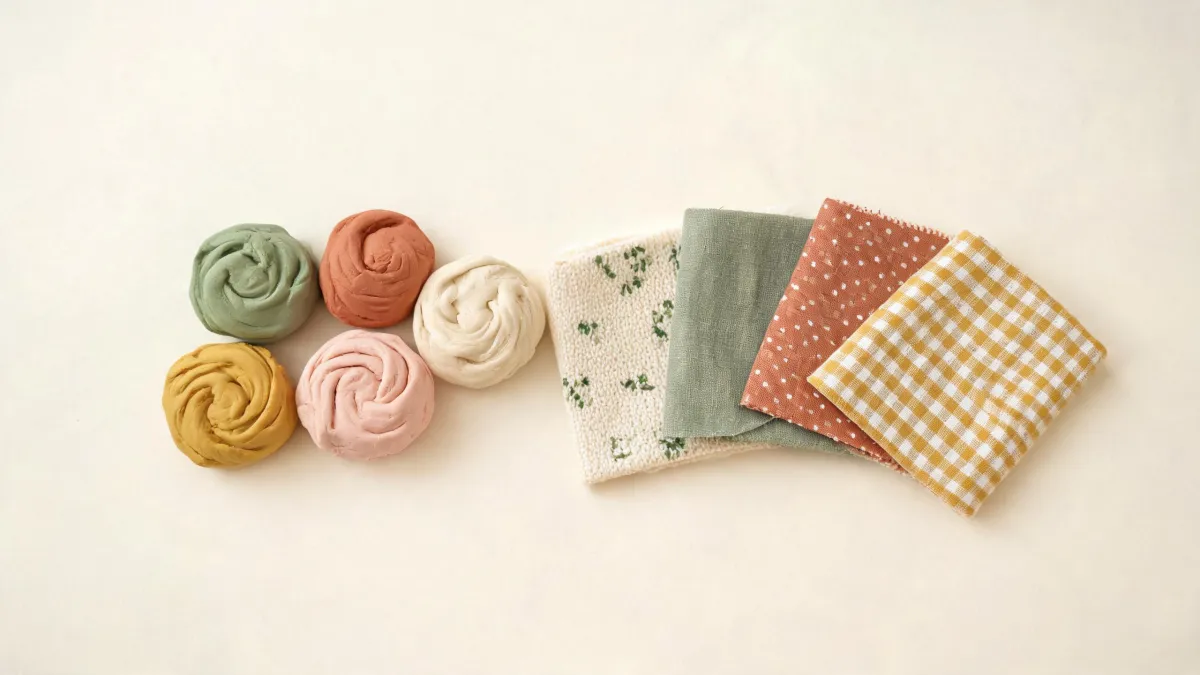
Ranked by construction rather than by label, three groups in this line earn the word quality: one-piece footed pajamas, bodysuit-and-pants sets, and the Beekeeper™ wearable blankets in 0-24m. Those three are cut as complete garments out of a single fabric family, so fit, seams and wash behavior get solved once instead of being patched across two mismatched parts. Everything else in the catalog — bubble rompers, printed tee-and-shorts sets, jumpsuit-and-hat bundles — borrows the same soft vocabulary without doing the same structural work. The ranking below is the version I would defend to a parent standing in an aisle with a fixed budget and one laundry basket.
The Short Answer: Which Pieces Earn the Word Quality
The catalog page makes the ranking visible before you open a single product. The navigation splits the line into new arrivals, best sellers, layette, family matching, pajamas, toddler and kids, and essentials, and inside the pajamas menu the sorts are shop by collection, shop by holiday, shop by size, shop by style and shop by fabric — with PolarBee™ Repreve® microfleece listed as its own fabric entry. That last one carries the most information, because a retailer that turns fabric into a navigation filter is saying fabric is the variable that changes the product, not a word picked for the tag. The Beekeeper™ wearable blankets for 0-24m get their own menu slot instead of hiding inside accessories, which is the same signal in a different place: the piece is treated as a category, not a colorway.
Two qualifiers shape that answer. The ranking is size-band specific, because a newborn and a 2T-5T toddler are not solving the same problem; the catalog separates them, with Beekeeper™ wearable blankets listed at 0-24m, then 2T-5T for toddler and kids, then 6Y-12Y beyond that. And it assumes repeated wear. If you are buying one outfit for a photograph, or a gift that will be worn twice, print and occasion matter more than construction and the ranking flips on purpose. Family matching and matching sibling pajamas are the clearest example of that flip, since the decision there is about several people looking coordinated, not about which single garment survives thirty trips through the wash.
How to Read the Quality Signal on a Listing Page
Two similar listings can wear the same adjectives, so the question is what actually separates them. The answer sits on the left of the page: the fabric filter. Organic cotton and PolarBee™ Repreve® microfleece are kept as separate fabric collections here, and the separation is the useful part, because the two are not ranked versions of each other. Organic cotton answers breathability, next-to-skin softness and wash tolerance for ordinary days; PolarBee™ Repreve® microfleece answers warmth for the cold stretch of the year. Treat microfleece as the upgrade to cotton and you will buy the wrong piece for a summer baby. Treat cotton as the safe default and you will underdress a winter sleeper.
So run three checks in order before anything goes in the cart. Fabric family first: open shop by fabric and decide whether this purchase is for warmth or for the ordinary day, because that decision alone removes half the catalog. Cut second: ask whether the listing is a complete garment or one part of one, which is the difference between a footed one-piece that covers the whole body and a tee whose bottom must be bought separately. Size band third, since the line is organized for 0-24m, 2T-5T and 6Y-12Y and shop by size is a working filter rather than a dropdown decoration. Shop by style is the weakest of the five, because style changes seasonally and says nothing about how a seam behaves after twenty washes.
The one that overrides the other two is the size band. A perfectly built footed pajama in the wrong band is not a quality purchase; it is a return. That is why the Beekeeper™ wearable blankets carry 0-24m in the navigation instead of sitting inside a general blanket category — the band is the product. The same logic runs upward through toddler and kids sizing and through family matching, where the point is that one fabric and one print exist across several bodies at once. Practical version of the rule: if you cannot state the band you are buying for, you are not yet in a position to judge the piece, and the other two checks are wasted effort.
Sleep Pieces: Where Quality Shows Up First
Start there, and the size of that block surprises most parents. One-Piece Footed Pajamas is the deepest category in the catalog at 128 listings. The rest of the field is thin beside it: Bodysuit & Pants Sets at 16, Matching Pet Bandanas at 10, Baby Coats & Jackets at 8, Baby Lotions & Moisturizers at 4, and two jumpsuit bundles — Jumpsuit & Hat Sets, and Jumpsuit, Bib & Hat Sets — at 3 listings each. Read that as a proxy for iteration rather than a popularity contest. A cut with 128 versions behind it has had its armholes, gussets, ankle cuffs and snap placement argued over dozens of times; a cut with three has not. Which is exactly why the thin categories deserve the closest inspection in the line.
Sleep is where the accumulated iteration pays off, because overnight wear is the longest uninterrupted wear a garment gets. The 0-24m Beekeeper™ wearable blankets sit at the middle of that: a parent choosing between two of them is choosing fit and material rather than print, since the piece spends eight to twelve hours against skin and goes through the laundry more often than anything else in the drawer. The brand frames itself around organic baby clothes, pajamas and essentials, and that order is not accidental — pajamas are the middle term because they are the problem the line is built to solve. Mechanically, a footed one-piece closes the waist gap a two-part set leaves open: no cold band of skin at three in the morning, no separate top riding up out of the bottoms.
Daytime Layers: Bodysuits, Sets, and the Small Stuff
Daytime is a different problem with a different answer. Bodysuit & Pants Sets at 16 listings is the block where daywear construction is actually decided, and the reason is arithmetic: a set only works if the top and the bottom are cut to the same body, in the same fabric family, with a rise that does not pull the snaps sideways once the child sits down. That is a joint engineering problem, which is why the set block deserves more attention than its listing count suggests. The jumpsuit-with-hat bundles at 3 listings each sit at the opposite end: a thin category where the hat does most of the selling, so inspect the seams and the neckline opening rather than the styling.
Here is the misreading worth correcting, because it costs money. Price does not rank quality inside this line. The Mediterranean Floral Baby Girl Bubble Romper 2-Pack Set is $32.95; the Organic Girl Slub Tee & Shorts Set is $24.95, and the Color Blocked Tee & Shorts Set - Oat Beige is $24.95 as well. A decorative two-pack and a set that will be worn twice a week sit within eight dollars of each other, so a parent who reads the tag as a quality score pays a premium for the piece that gets outgrown first and laundered least. The word organic does not settle it either: organic describes the fiber, not the cut. The usable signals stay fabric family and cut type.
Piece by Piece: The Decision Table
The question that turns all of this into an order is what to buy first with a fixed budget. Two program facts set the frame: standard shipping is free on orders of $49 or more, and a first purchase made through email or SMS signup takes 15% off. Neither changes which pieces are better made, but both change the shape of a first order. A parent working with roughly $40 is deciding between several mid-priced daywear pieces and three sleep pieces; a parent working with $55 is not making that trade at all, because the shipping threshold is already cleared. Decide which side of $49 you are on before you decide what goes in the cart.
Then apply one check per piece group and stop. For one-piece footed pajamas the order is fabric family, then footed cut, then size band — a cotton footed sleeper in the right band is the safest first purchase in the line, and the $24.95-to-$32.95 spread says almost nothing about which one that is. For a bodysuit and pants set, confirm that the top and the bottom are listed under one fabric family before you look at the print. For a Beekeeper™ wearable blanket, the check is the 0-24m band and the closure. And one caution on the clearance blocks: clearance clothing and clearance pajamas can be strong value, but you do not get to choose the fabric family there, so treat clearance as a supplement to the list rather than a shortcut through it.
Bundle arithmetic is the last variable, and it cuts both ways. Build-your-own bundles and nursery bundles both take 10% off, which on a first order is real money — enough to decide whether one more sleep piece fits in the budget. But a discount only helps if it does not rewrite the list. The failure mode is bundling yourself into pieces that were never in the quality-first plan because the cart needed one more item to qualify; a decorative romper added to round out a bundle is still a decorative romper, and 10% off a piece you did not need is not a saving. Run the bundle math after the list is written, never as a way of writing it.
What to Buy First, and What Not to Overbuy
So here is the rule I would hand a parent building a first order: buy the sleep block first, in one fabric family, whole garments only. Concretely, that means four or five one-piece footed pajamas in the size band the child is in right now, all in the same fabric collection so the drawer behaves the same way in the wash. The brand organizes itself around organic baby clothes, pajamas and essentials, and that sequence works as a buying order rather than a slogan: get the overnight pieces right, layer daytime sets on top of them, and treat the decorative and single-part pieces as garnish. Nothing in that rule depends on reciting a certification number or reading a spec sheet.
The boundary is where the rule should be dropped. It stops when the purpose is not wear — a photo outfit, a gift, a family matching set for a holiday — because coordination is the goal there and wash behavior is beside the point. It stops when the size band is unknown, since a gift for a baby who has not arrived makes the band a guess. And it is shaped, though not changed, by two program facts: free standard shipping on orders of $49 or more, and 15% off a first purchase through email or SMS signup. Those shift how many quality-first pieces a fixed budget reaches. They say nothing about which pieces belong on the list.
The filter to carry out of this page is short enough to use in an aisle: one fabric family, one whole garment, one size band that fits the child now. A piece that passes all three is the better buy even when a cheaper neighbor has the nicer print and even when that neighbor wears the same organic label. Where the filter fails, it fails predictably — photo outfits, gifts with an unknown band, clearance racks where the fabric family is not yours to choose. Used that way, the ranking stops being a claim about a brand and becomes a way of spending a fixed amount of money on the pieces that will still be in the drawer long after the first fifty washes.